

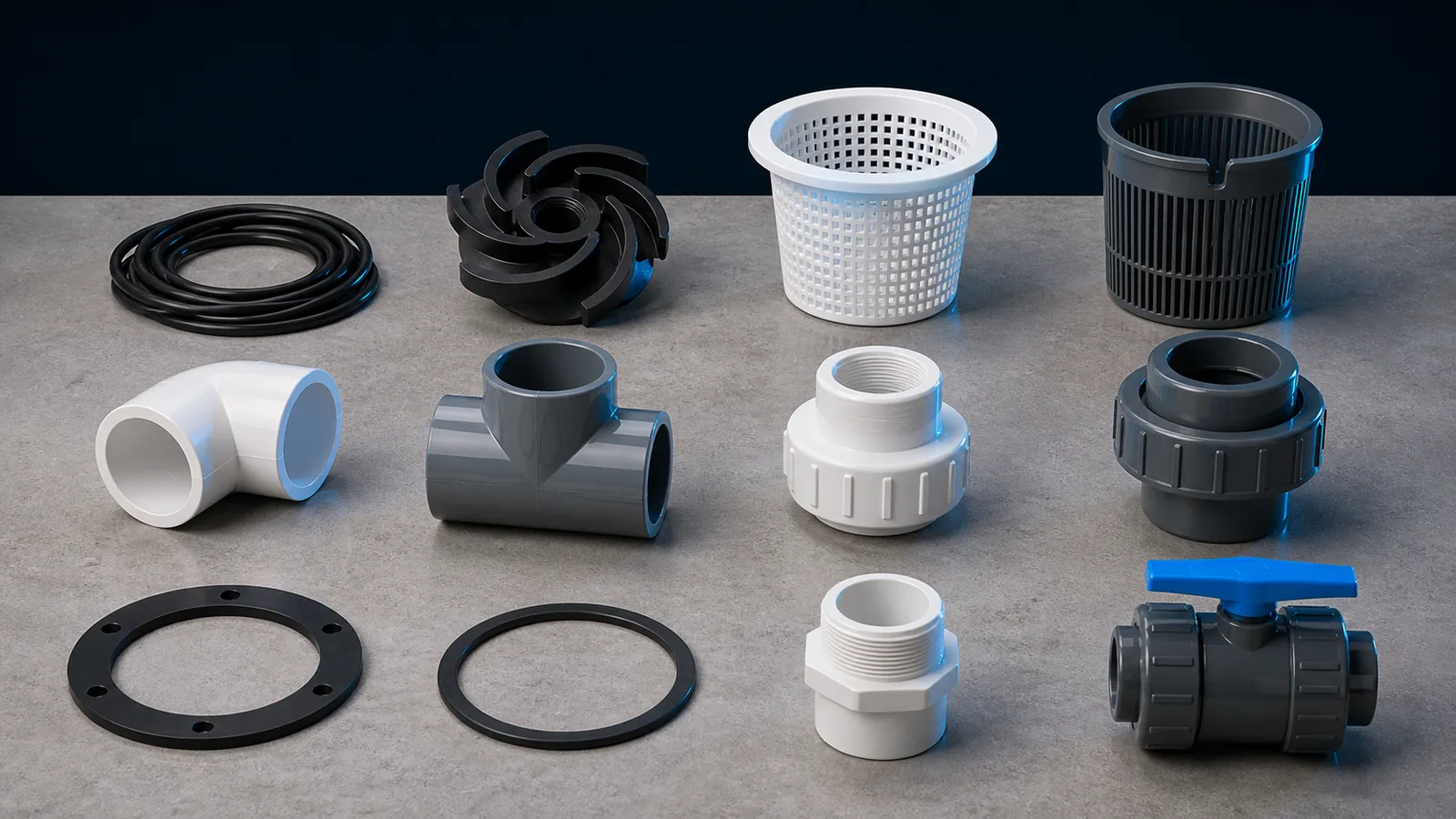
Launching a private-label range is not technically difficult. What kills it is sequence: artwork commissioned before the parts are validated, tooling committed before demand is proven, sixty SKUs launched when twelve would have taught the same lessons at a fifth of the cost. This is the order that works.
Weeks 1–2: choose the SKUs from your own sales data
Do not start from a supplier's catalogue. Start from your own history: pull the parts you already sell, ranked by units.
Then filter by three criteria:
- Repeat purchase. A part a customer buys once a year beats a part they buy once.
- Low fitment ambiguity. Parts that fit one clearly identified thing, not parts requiring an interrogation before every sale.
- Aftermarket-appropriate. Sealing, structural and hardware components. Not gas train, not safety devices, not ignition controls.
Target twelve to twenty SKUs. Fewer than ten is not a range; more than twenty means you cannot pay attention to any of them.
Weeks 2–3: shortlist suppliers and request samples
Approach three suppliers with the same list. Ask each for: cross-reference matches against your numbers, material per part, carton data, FOB pricing, and single-piece samples.
Two things this reveals immediately. How many of your numbers come back with a real match — a supplier who claims all twenty without asking a question has not checked. And how they handle the ones they cannot supply; a supplier who says so plainly is more useful than one who says yes to everything.
Order samples from the two best. Sample cost is trivial against the cost of being wrong.
Weeks 4–5: validate the samples properly
Not an eyeball comparison. Per part: measure the critical interfaces against a real original of a known revision, dry fit, install and pressure-test where possible, confirm the material in writing, and record the numbers.
Cut ruthlessly. A twenty-SKU shortlist becoming fourteen at this stage is a success, not a setback. Every part that fails here is a return you did not have.
By the end of week 5 you should have: a validated list, one chosen supplier, and a measured baseline per part.
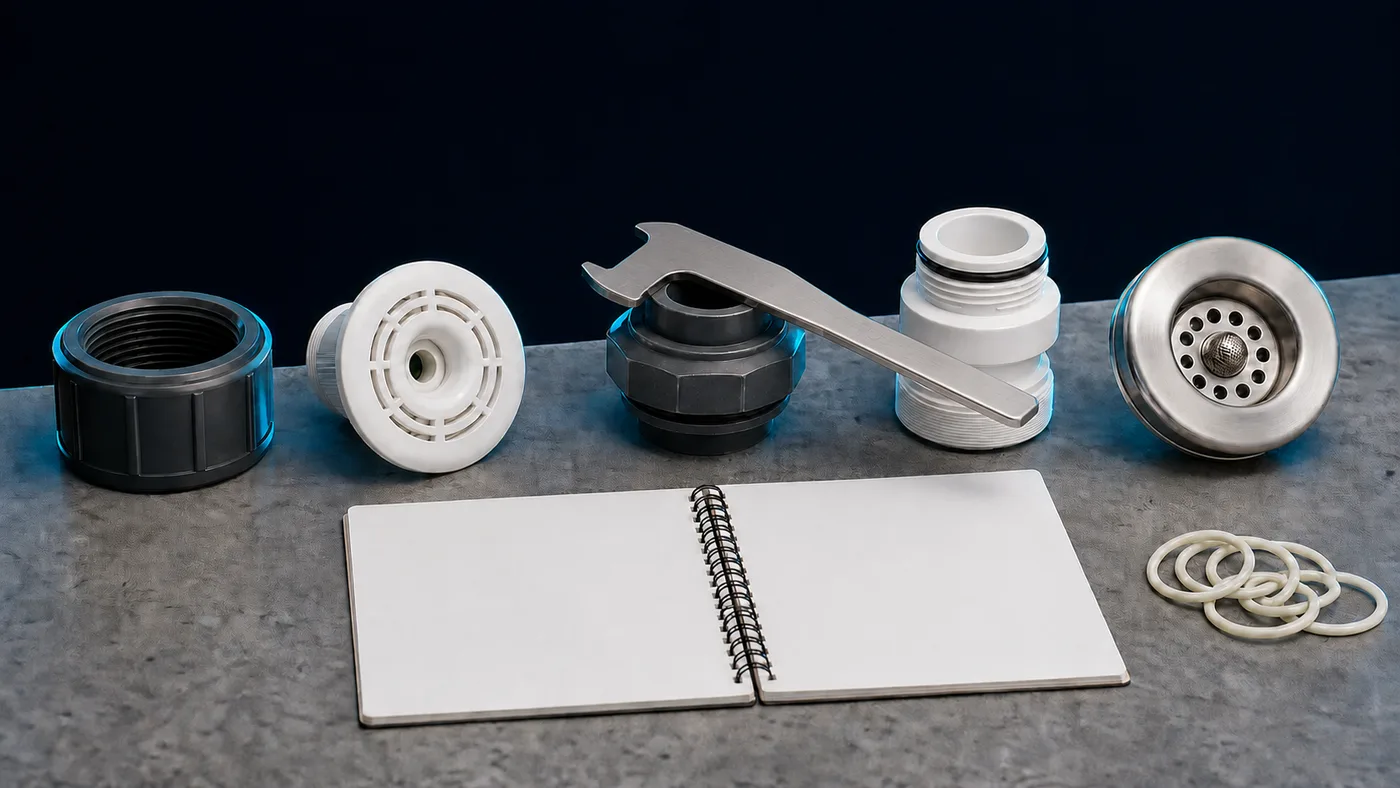
Week 6: place a standard-label production order
Not private label. Standard packaging, your validated list, real quantities.
This is the step most people skip and it is the highest-value one. It tests the supplier's production — not their samples — before you spend money on artwork that is useless if the parts are wrong. Lead time is 3–5 weeks depending on order value, which is why it starts now.
While it is in production, weeks 6–9 are free for the branding work.
Weeks 6–9: brand, artwork and data (in parallel)
Brand decisions. Name, logo, colours. Keep it simple — this is a parts brand, not a consumer product. Check the name is not already used in the trade and is registrable in your market.
Packaging design. Get dielines from your supplier first, then design to them. Every panel needs: your brand, your part number, what the part is, what it replaces, quantity, country of origin, barcode, and the disclaimer.
Your own part numbering. Establish it now, before you have 200 SKUs and no system. Prefix plus a category code plus a sequence is enough. The rule that matters: your number must never be confused with an OEM number — a scheme that mimics OEM formats produces support calls forever.
Product data. Photograph the samples, write the descriptions, build the cross-reference table. This is the asset that outlives any single supplier relationship.
Weeks 10–11: receive, inspect, sell through
Stock arrives. Inspect against your recorded baseline — weigh a piece per SKU, measure the critical dimensions on a few, check carton counts and packing.
Then sell it. Under the standard label, to real customers, at your real price. What you are looking for over the next few weeks:
- Fitment complaints (should be zero if validation was done properly)
- Which SKUs move and which sit
- What customers ask that your product data does not answer
Week 12: commit to packaging, only for what earned it
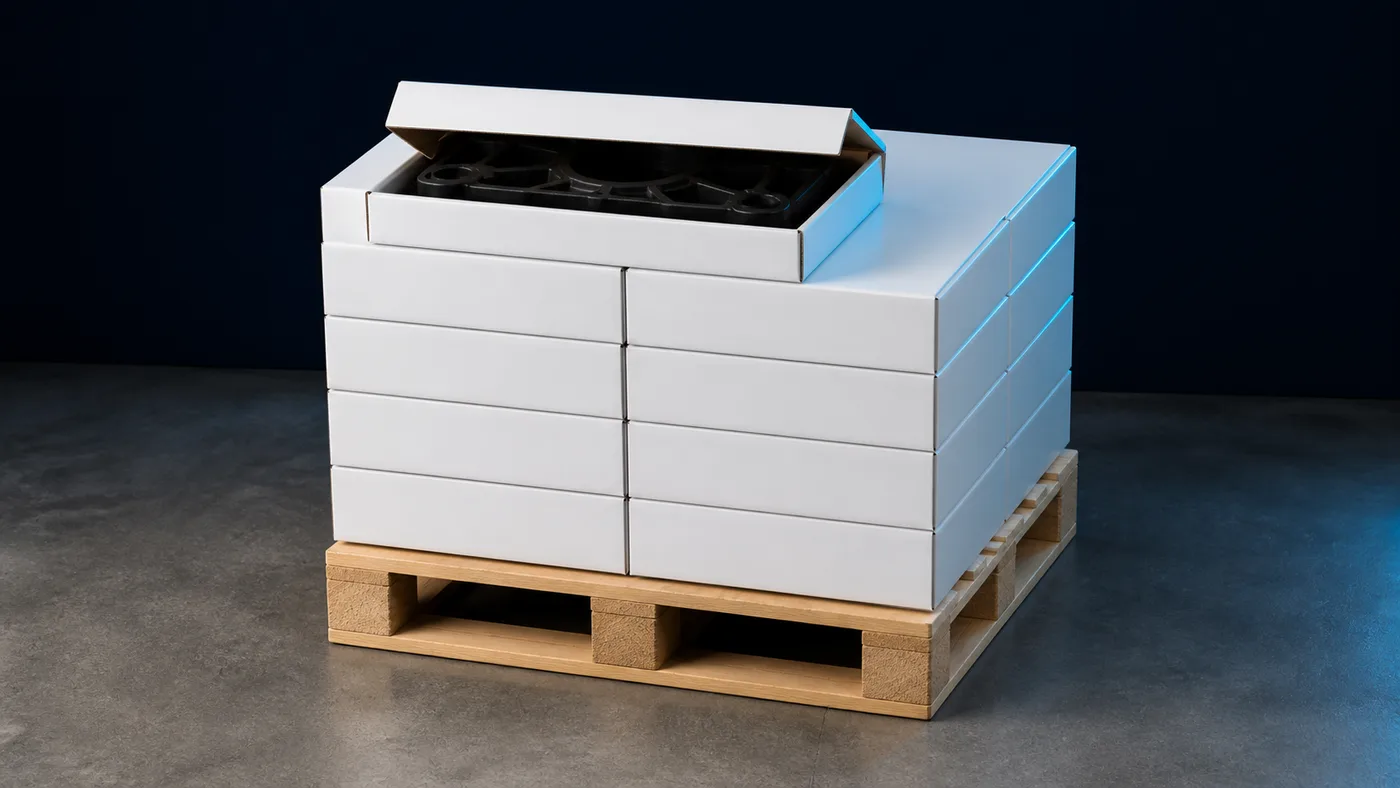
Now — and only now — order custom packaging, and only for the SKUs that sold. If four of your fourteen are slow movers, they stay in standard packaging or get dropped.
This is the whole point of the sequence. Packaging is the least reversible spend in the process, and by week 12 you know which parts deserve it.
The 90-day summary
| Weeks | Activity | Committed spend |
|---|---|---|
| 1–2 | Select SKUs from your own sales data | None |
| 2–3 | Shortlist suppliers, order samples | Sample cost |
| 4–5 | Validate, cut the list | None |
| 6 | Standard-label production order | First real spend |
| 6–9 | Brand, artwork, numbering, product data (parallel) | Design time |
| 10–11 | Receive, inspect, sell through | None |
| 12 | Custom packaging for proven SKUs only | Packaging spend |
What to resist
Tooling in the first 90 days. Unless a part genuinely does not exist anywhere, an existing tool serves the purpose and the money is better spent on range width.
Launching everything at once. A twelve-SKU launch you can support beats a sixty-SKU launch you cannot photograph, describe or answer questions about.
Exclusivity demands. Suppliers grant exclusivity to customers with a track record. Asking on order one signals inexperience; asking after a year of steady volume is a normal conversation.
What comes after
Ninety days gets you a validated range on a shelf with your name on it. It does not get you a brand — that takes a reorder cycle where quality holds, and a customer who reorders because the last one worked.
The second production order is the real test, and it is where you find out whether the supplier's process control is real or whether run one was luck.
Sourcing
POOLPOINT supports this sequence directly: single-piece samples for validation, standard-label production at 50 pcs per part with mixed cartons, and private-label packaging once you know which SKUs earned it. Send us the list from week 1 and we will tell you which numbers we can match — including the ones we cannot.